Android OCR in 2026: The Best Free OCR App for Android, and an Option With No Install
Short answer
The best OCR app for Android depends on the job. Google Lens copies and translates what the camera sees; Adobe Scan and CamScanner make PDFs from paper, and CamScanner watermarks free exports. Developers need an Android OCR library such as ML Kit. FastOCR (we make it) is a website, not an app: in Chrome it turns a photo into text and a searchable PDF, and translates it, Uzbek included.
By the FastOCR team · Updated 4 November 2026 · Accuracy test run 31 October 2026
We make FastOCR. Accuracy figures come from our own test of each tool we scored, ours included, on the same scans; other facts link to each tool's own pages. How we tested
Try it here
Drop your file here
PDF, PNG, JPG, WebP, BMP, HEIC
PDF up to 1 GB · images up to 20 MB
Tips for a clear photo
- Lay the page flat.
- Use even light, with no shadows.
- Turn off the flash to avoid glare.
- Fill the frame with the page.
Verdict
Pick FastOCR if
- You want the text from a photo now, in Chrome, without installing an app.
- The photo is Urdu, Arabic, Bengali, Tamil or Chinese. On those scans FastOCR got between 1.0% and 9.1% of characters wrong in our test, lower is better.
- You need more than copied text: a searchable PDF, a Word or Markdown file, or a translation.
Pick another tool if
- You want to copy or translate a sign or menu by pointing the camera at it: Google Lens.
- You scan many paper pages into PDFs on the phone: Adobe Scan or CamScanner.
- You are building an app that reads text on the device: ML Kit or Tesseract.
Best for
- Text and a searchable PDF from a phone photo, with nothing to install: FastOCROur tool
Open it in Chrome and use the camera or your gallery. It got 9.1% of the Urdu page's characters wrong in our test; Tesseract, with its Urdu pack, got 55.3% wrong. Lower is better.
- Copying or translating text you can point the camera at: Google Lens
Google says Lens copies text to your phone or computer and translates menus, signs and handwriting in over 100 languages.Source
- Paper to a searchable PDF in a free scanner app: Adobe Scan
Free to download. Adobe says its OCR makes editable, searchable PDFs, and scans can be shared as PDF, JPEG or Word.Source
- Bulk scanning on the phone, if a watermark on free exports is fine: CamScanner
Its FAQ gives basic accounts up to 10 recognitions, and free PDF or image exports carry a CamScanner watermark and QR code.Source
- Open-source OCR inside your own app: Tesseract
Free under the Apache License and trained for more than 100 languages. It has no window of its own, so it lives inside other software.Source
Comparison table
| Tool | What it is on Android | Free use, as advertised | What you get back | Scripts named |
|---|---|---|---|---|
| FastOCR (our tool)Our tool | What it is on AndroidA website in Chrome; no install | Free use, as advertisedImages: no sign-up, no watermark, a daily cap until you sign in. PDFs: free account. | What you get backText, searchable PDF, Word, Markdown; translation of images | Scripts named100+ languages, detected automatically |
| Google Lens | What it is on AndroidPart of the Google app and Google PhotosSource | Free use, as advertisedNot statedSource | What you get backCopied text, translationSource | Scripts namedNo list of scripts; translates in over 100 languagesSource |
| Adobe Scan | What it is on AndroidScanner app, free to downloadSource | Free use, as advertisedNot statedSource | What you get backSearchable PDF, JPEG, WordSource | Scripts namedHindi added on Android; the iOS list names Chinese, Japanese, KoreanSource |
| CamScanner | What it is on AndroidScanner app; the web version signs in to the same accountSource | Free use, as advertisedBasic accounts: up to 10 recognitions; watermark and QR code on exportsSource | What you get backWord, Excel, clipboardSource | Scripts namedOver 40 languages, including Chinese, Japanese, KoreanSource |
| Microsoft Lens | What it is on AndroidRetired; left the stores on 9 February 2026Source | Free use, as advertisedNew scans stopped on 9 March 2026Source | What you get backMicrosoft points to the OneDrive app scannerSource | Scripts namedNot statedSource |
Why FastOCR
Photos and screenshots
Every image upload gets raw text and a single-page searchable PDF, plus Word and Markdown.
See Photos and screenshotsLanguages
100+ languages, detected automatically, including mixed pages.
Share of characters wrong on our evidence scans (lower is better): Arabic 2.6%, Urdu 9.1%, Bengali 7.4%, Tamil 2.2%, Chinese 1.0%.
See LanguagesTranslation and AI Polish
Translate or clean up the text of a finished image.
See Translation and AI PolishFree use
Images: free, no sign-up, no watermark. PDFs: free account.
See Free useFor developers
REST API, Python SDK, MCP server for AI agents, LangChain and LlamaIndex loaders.
See For developers
Proof
No Android app was run. On the six scripts shown, FastOCR read Urdu at 9.1% of characters wrong against 55.3% for Tesseract and 19.6% for OCR.space Engine 3 (lower is better).
The scan: a page of the Urdu book Tota Kahani (written 1801)
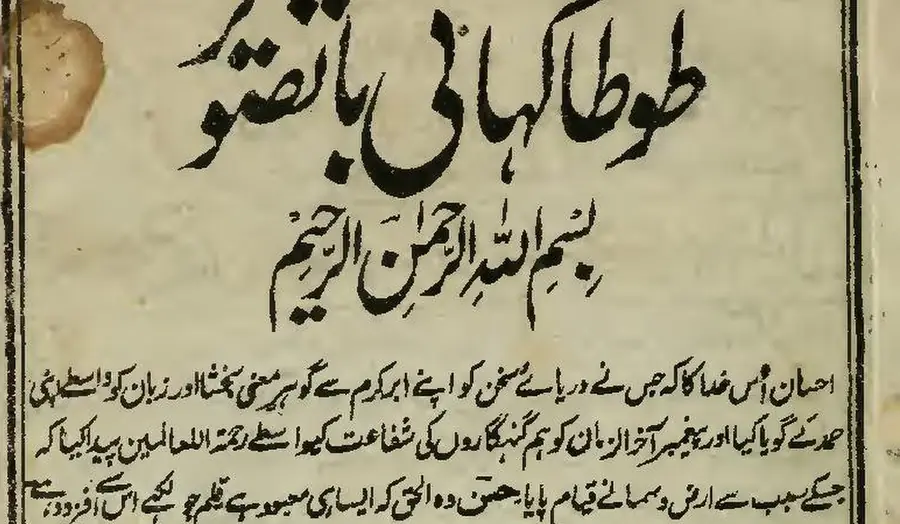
First body line, as printed (Wikisource transcription)
احسان اُس خدا کا کہ جس نے دریائے سخن کو اپنے ابر کرم سے گو ہرِ معنی بخشا اور زبان کو واسطے اپنی
- 9.1% of characters wrong
FastOCR
published by us
احسان اُس خدا کا کہ جس نے دریائے سخن کو اپنے ابر کرم سے گو ہر معنی بخشا اور زبان کو واسطے اپنی
- 9.2% of characters wrong
imagetotext.info
free web tool
احسان اُس خدا کا کہ جس نے دریائے سخن کو اپنے ابر کرم سے گو ہر معنی بخشا اور زبان کو واسطے اپنی
- 30.4% of characters wrong
OCR.space
default Engine 2
احسان أس مداكاكيج سنءريات سخن كواب ابركرم ← كوبر معى تختا اورزيان كوداسطيى
- 55.3% of characters wrong
Tesseract 5.5.4
the engine NewOCR says it uses
ا احمان اس دا اجس ےه در را سخ نکو ان ارک سےکوس ین یناد زا نک ری
- 99.6% of characters wrong
OnlineOCR.net
no Urdu option
tA)K11 tAirk.,....11.30,t4 ikitt r CIO 4 %;114iiii
% of characters wrong by script, lower is better
- FastOCR
- OCR.space Engine 3
- imagetotext.info
- OCR.space default Engine 2
- Tesseract 5.5.4 (the engine NewOCR says it uses)
- PDF24
- Chinese
- FastOCR 1.0%OCR.space E3: No scoreOCR.space E2 3.0%Tesseract 71.9%PDF24 3.2%
- Urdu
- FastOCR 9.1%OCR.space E3 19.6%imagetotext.info 9.2%OCR.space E2 30.4%Tesseract 55.3%PDF24 69.0%
- Bengali
- FastOCR 7.4%OCR.space E3 11.2%imagetotext.info 7.9%OCR.space E2 100.0%Tesseract 31.7%PDF24 18.6%
- Arabic
- FastOCR 2.6%OCR.space E3 2.9%imagetotext.info 2.9%OCR.space E2: Not supportedTesseract 20.4%PDF24 35.5%
- Tamil
- FastOCR 2.2%OCR.space E3: No scoreOCR.space E2 99.8%Tesseract 8.5%PDF24 9.2%
- English
- FastOCR 3.3%OCR.space E3: No scoreOCR.space E2 4.5%Tesseract 8.5%PDF24 10.1%
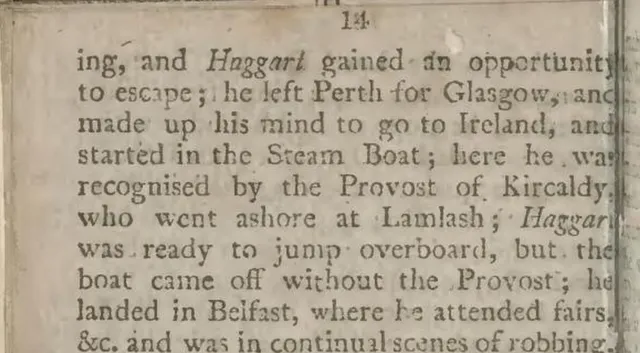
Photo of a page
 (opens full size)
Text FastOCR returned
ing, and Haggart gained an opportunity
to escape; he left Perth for Glasgow, and
made up his mind to go to Ireland, and
started in the Steam Boat; here he wa
recognised by the Provost of Kircaldy
who went ashore at Lamlash; HaggarHow accurate OCR is on real scans
On 31 October 2026 we ran public-domain scanned book pages, one per script, through the free web OCR tools we could reach. This page shows six: Arabic, Urdu, Bengali, Tamil, Chinese and English. FastOCR's output on the same pages came from its production API on 25 October. Scores are the share of characters wrong next to the Wikisource text, so lower is better. No Android app was in this test.
Script matters more than the tool's name. With the right language pack, Tesseract got 55.3% of the Urdu page and 20.4% of the Arabic page wrong; FastOCR got 9.1% and 2.6%. On clean English the gap is small: Tesseract 8.5%, FastOCR 3.3%. All figures are characters wrong, lower is better.
A phone photo is harder than a flat scan: shadows, angle and blur all add errors. Hold the phone square to the page, fill the frame and use daylight. The full free-tool results are in best free OCR tools.
1. FastOCR in Chrome (our tool)
- Best for
- A photo you need as text, a searchable PDF, a Word file or a translation, without installing an app.
- Watch out for
- It is a website, so it needs a connection and has no scanner screen with edge detection. Without an account there is a small daily image cap.
FastOCR has no Android app. Open Image to Text in Chrome: on a phone the upload box shows Choose a file for your gallery and Use camera, which opens the rear camera. Each photo comes back as raw text and a one-page searchable PDF, with Word and Markdown downloads. Images need no sign-up and carry no watermark.
It reads 100+ languages and works out the language itself, even when one photo mixes scripts. A finished image can be translated or tidied with AI Polish. A scanned PDF on your phone comes back as a searchable PDF with a free account, and right-to-left text copies in the right order.
Also from FastOCR:
- Free PDF tools that run in the phone's browser: merge, compress, split, sign and more.
- Bank statements to Excel, CSV and QuickBooks.
- On a computer, free offline Mac and Windows apps, in public beta.
- On a desktop browser, a Chrome extension that copies text from anything on screen.
In our test: FastOCR got 2.6% of the Arabic page's characters wrong, 7.4% of the Bengali page and 2.2% of the Tamil page, lower is better.
2. Google Lens
- Best for
- Copying or translating a sign, menu or note you can point the camera at.
- Watch out for
- Its pages do not list which scripts it reads, and do not mention PDF input or file exports.
Lens sits in the Google app, and in Google Photos on some Android phones. Google says it copies text to your phone or computer and translates menus, signs and handwriting in over 100 languages. That number is about translation; the pages we read do not say which scripts Lens reads from a photo.
Google's help page says Lens activity can be saved to your Google Account unless Web & App Activity is off. We did not test Lens.
Source: Google Lens and Google Photos Help, checked 4 November 2026.
3. Adobe Scan
- Best for
- Turning paper pages into a searchable PDF inside a free scanner app.
- Watch out for
- Adobe's iOS troubleshooting page says recognition needs a network and an Adobe cloud storage connection, and returns nothing if the chosen language does not match the page.
Adobe Scan is free to download. Adobe says its OCR turns scans into editable, searchable PDFs, and you can share them as PDF, JPEG or Word. Adobe's settings page lists 18 recognition languages, including Chinese, Japanese and Korean, and the Android release notes add Hindi, Vietnamese and Indonesian. Arabic and Urdu are not named on the lists we read.
The recognition language follows the phone's language unless you change it in Preferences. We did not test Adobe Scan.
Source: Adobe Scan and its Android release notes, checked 4 November 2026. Compare: FastOCR vs Adobe Scan.
4. CamScanner
- Best for
- Scanning many pages on the phone when a watermark on free exports is acceptable.
- Watch out for
- Basic accounts get up to 10 recognitions, and free PDF or image exports carry a CamScanner watermark and QR code.
CamScanner is a scanner app with a web version; to use it on a computer you sign in to the same account as your phone. Its home page says it reads 41 languages and its text page names Chinese, Japanese and Korean; Arabic, Urdu and Hindi are not named on the pages we read. Text goes to Word, Excel or the clipboard, and it offers bulk extraction.
Its FAQ says Premium raises recognition to 1,000 a month and removes the watermark. On 31 October 2026 its web Extract Text page asked us to sign in before any upload, so it has no score in our test; the screenshot is on the CamScanner comparison.
Source: CamScanner FAQ, checked 4 November 2026. Compare: FastOCR vs CamScanner.
Microsoft Lens is retired: what to use now
Microsoft Lens no longer makes new scans. Microsoft's retirement page says the Android and iOS app began retiring on 9 January 2026, left the app stores on 9 February 2026, and stopped new scans on 9 March 2026. Microsoft suggests the scanner in the OneDrive app, which keeps scans in OneDrive rather than on the phone.
If you used Lens to grab text from photos, Google Lens covers quick copying, Adobe Scan and CamScanner cover multi-page PDFs, and FastOCR in Chrome gives text plus a searchable PDF without another install.
Source: Microsoft Lens retirement, checked 4 November 2026.
Uzbek OCR and translation on Android
FastOCR reads Uzbek in both the Latin and the Cyrillic alphabet and detects the language itself. On Android, open fastocr.org in Chrome, take or pick a photo of the Uzbek text, wait for the result, then tap Translate and choose a language. Translation needs a free sign-in and works on a finished single image, not on a PDF. More on the two alphabets is on the Uzbek OCR page.
Uzbek was not one of our test scripts, so we have no accuracy number for it; read the text once against the photo. Google says Lens translates in over 100 languages, but its pages do not list which scripts it reads, so check Uzbek there with a test photo too.
Android OCR library options for developers
Building your own app gives you three routes:
- [ML Kit text recognition](https://developers.google.com/ml-kit/vision/text-recognition/v2/android): Google's on-device library. Its page lists the Latin, Chinese, Devanagari, Japanese and Korean scripts; Arabic and Cyrillic are not on that list. You can bundle the model in your app (about 4 MB per script per architecture) or let Google Play services download it.
- [Tesseract](https://github.com/tesseract-ocr/tesseract): open source under the Apache License, trained for more than 100 languages, with no window of its own. On Android it runs through a wrapper library, which we did not test; our Tesseract scores above come from a desktop run.
- A server API: send the photo to a server and keep the app small. The FastOCR REST API returns text or a searchable PDF and has a free monthly allowance. A Python SDK, an MCP server for AI agents, and LangChain and LlamaIndex loaders use the same API.
On-device libraries work offline and keep photos on the phone. A server API reads more scripts with no model to ship, but every photo needs a connection.
How we tested
- Dates: the web tools ran on 31 October 2026; FastOCR's output came from its production API on 25 October 2026. App facts were read on each vendor's own pages on 4 November 2026. The test is due a re-run before January 2027 ends.
- Pages: one public-domain or CC0 book scan per script, taken from Wikimedia Commons. Each page's Wikisource transcription is the reference.
- Score: characters wrong after removing spaces, punctuation and Arabic diacritics, lower is better. Wikisource and our own proofread key differ by 1% to 6%, so treat gaps under about 3 points as noise.
- Image width: 500 pixels for FastOCR on the Arabic, Urdu and English pages, 1,280 pixels for every other tool.
- Tesseract 5.5.4 ran on a desktop with the right language pack. OCR.space ran on its public demo key.
- No Android app was tested, and nothing was timed. CamScanner's web Extract Text page asked for a sign-in before upload, so it has no score.
When another tool is the better choice
- You want to copy or translate text the moment you point the camera at it: Google Lens is already in the Google app.
- You turn stacks of paper into PDFs every day and want a scanner app on the phone: Adobe Scan or CamScanner.
- You must read text with no connection, or you are building your own Android app: ML Kit or Tesseract run on the device.
FAQ
What is the best OCR app for Android?
It depends on the job. Google Lens is quickest for copying or translating text in front of you. Adobe Scan and CamScanner are built to turn paper into PDFs. For Urdu, Arabic or Bengali photos, FastOCR in Chrome had low error rates in our scan test; no Android app was tested.
Is FastOCR an Android app?
No. FastOCR is a website that works in Chrome on Android. Open fastocr.org, pick a photo from your gallery or tap Use camera, and you get the text plus a searchable PDF. Nothing is installed, so it needs a connection.
Is there an OCR Uzbek translation app for Android?
FastOCR does it in the Android browser rather than in an app. It reads Uzbek in Latin and Cyrillic letters; once the text appears, tap Translate on the results page. Translation needs a free sign-in and works on single images, not PDFs. We have not measured Uzbek accuracy.
Does Microsoft Lens still work on Android?
Not for new scans. Microsoft says the app's retirement began on 9 January 2026, it left the app stores on 9 February 2026, and new scans stopped on 9 March 2026. Microsoft points users to the scanner in the OneDrive app.
What is the best Android OCR library?
Google's ML Kit text recognition runs on the phone and lists Latin, Chinese, Devanagari, Japanese and Korean scripts. Tesseract is open source, covers more than 100 languages and runs through a wrapper. To keep the app small, call a server instead, such as the FastOCR REST API.
Is there a free OCR app for Android with no watermark?
Google Lens and Adobe Scan do not mention watermarks on the pages we read. CamScanner's FAQ says free exports carry a watermark and QR code until you upgrade. FastOCR in the browser puts no watermark on its text, searchable PDF, Word or Markdown files.
Do Android OCR apps work offline?
Some do. FastOCR is a website and needs a connection. Adobe's iOS troubleshooting page says Adobe Scan's text recognition needs a network and an Adobe cloud storage connection. ML Kit, built into your own app, keeps its recognition models on the phone.
Can I copy Turkish text from a photo on Android?
Yes. Open fastocr.org in Chrome on your Android phone, take or pick a photo, and copy the text. FastOCR reads Turkish, including ç, ğ, ı, İ, ö, ş and ü. We have not measured Turkish accuracy, so check names and numbers once.
Method
App facts come from each vendor's own pages, checked on 4 November 2026; a fact a vendor does not state is shown as Not stated, never as No. No Android app was tested. Accuracy is the share of characters wrong against the Wikisource text, lower is better, on one public-domain scanned page per script, run on 31 October 2026 for the web tools we could reach. Details are in how we tested.
Change log
- 18 July 2026: First published.
- 1 November 2026: Rewritten: FastOCR shown as a website, Microsoft Lens retirement added, scan accuracy test.
- 4 November 2026: Vendor facts re-checked on their own pages; added Android OCR library options and a no-watermark comparison.